
Party in the back. Business in the front.
Club Ichi is a community for event professionals. Its members had plenty to say and nowhere to publish it. We built Mullét, a publication they write themselves.
- Client
- Club Ichi
- Sector
- Events Industry · Community Publishing
- Year
- 2026
- Built with
- Vite, TypeScript, Supabase, Sanity CMS, Netlify
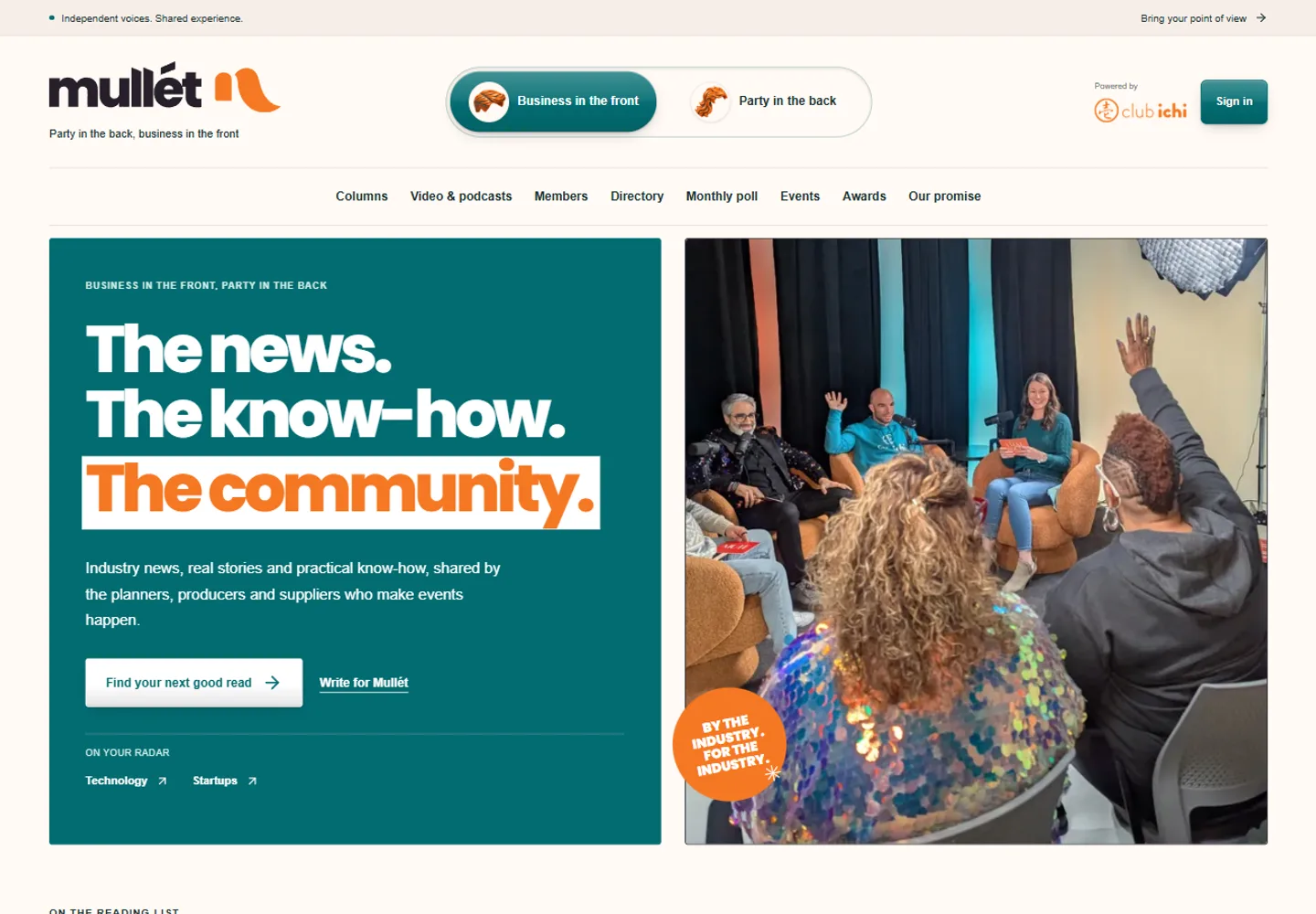
- 2editions: Business in the front, Party in the back
- 2sign-in routes, Google and Slack, resolving to one account
- 1editorial desk approving every story before it publishes
What is Mullét?
Mullét is an events industry publication powered by Club Ichi, a community for event professionals. Its stories are written by real planners, producers, and suppliers, and it runs two editions: Business in the front and Party in the back.
The industry had brochures. It needed a place to talk.
Club Ichi’s members are planners, producers, and suppliers. They know the work from the inside, and they have opinions worth reading. What they did not have was somewhere to publish them.
A marketing site would not fix that. A brochure speaks for one company. A community needs room for independent voices, a way to keep the quality up, and a reason for members to come back.
So we built Mullét: somewhere between Reddit and the Huffington Post, for the events industry.
A publication members write, with an editor at the door.
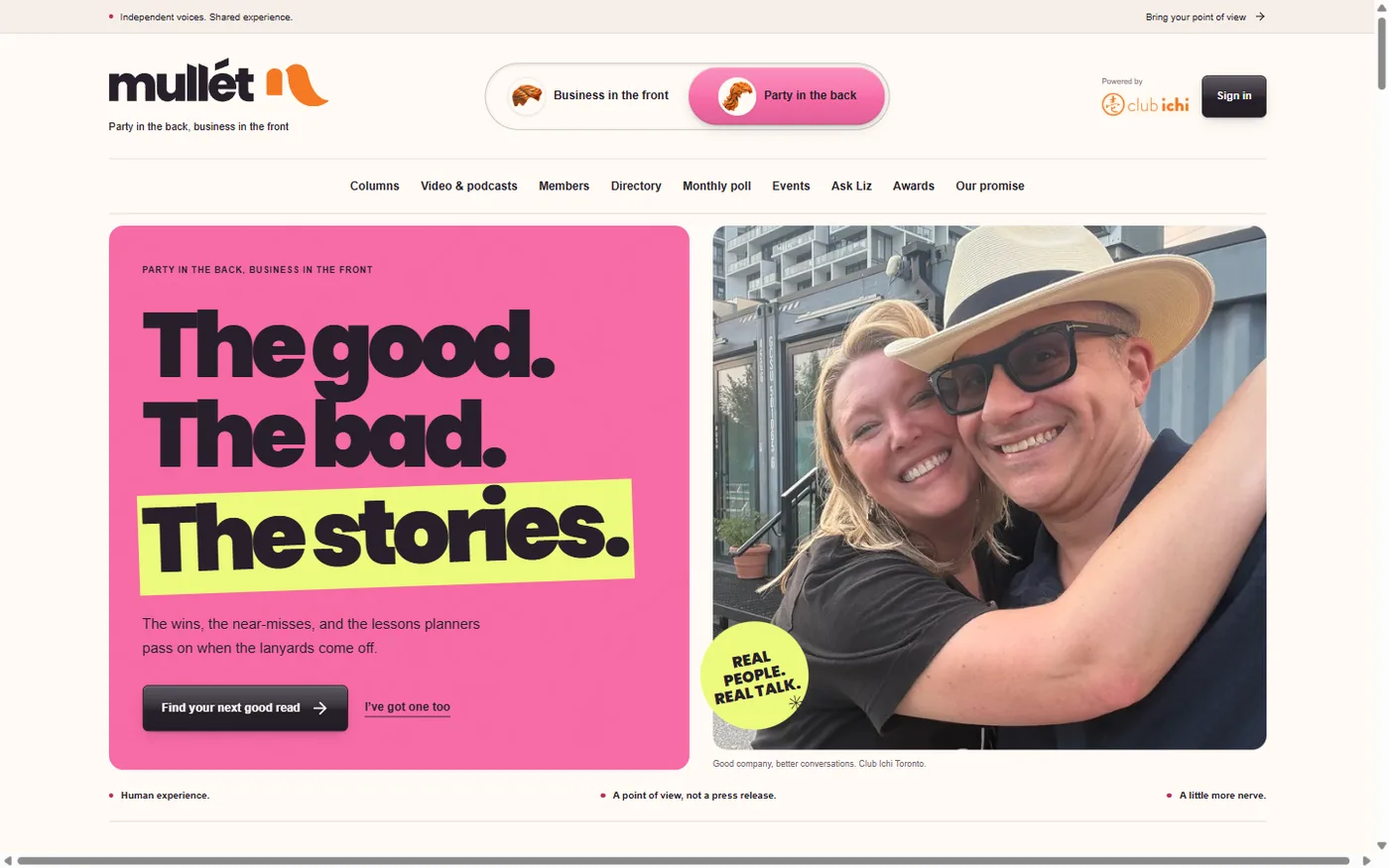
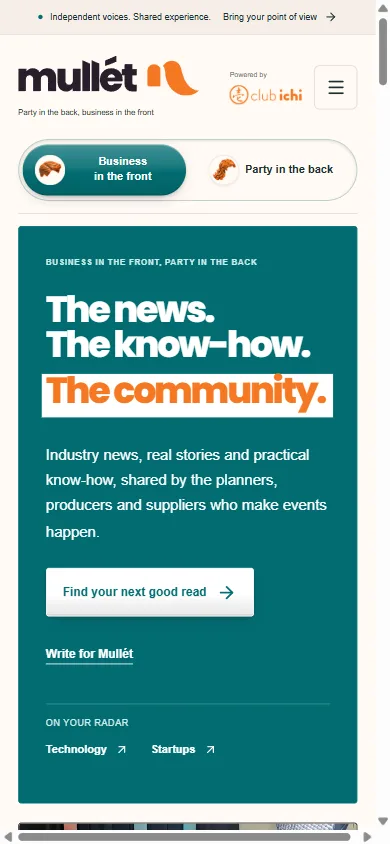
The name is the brief. Mullét runs two editions, switchable from the header. Business in the front carries news and know-how. Party in the back is the lighter edition: same publication, same members, a different mood.
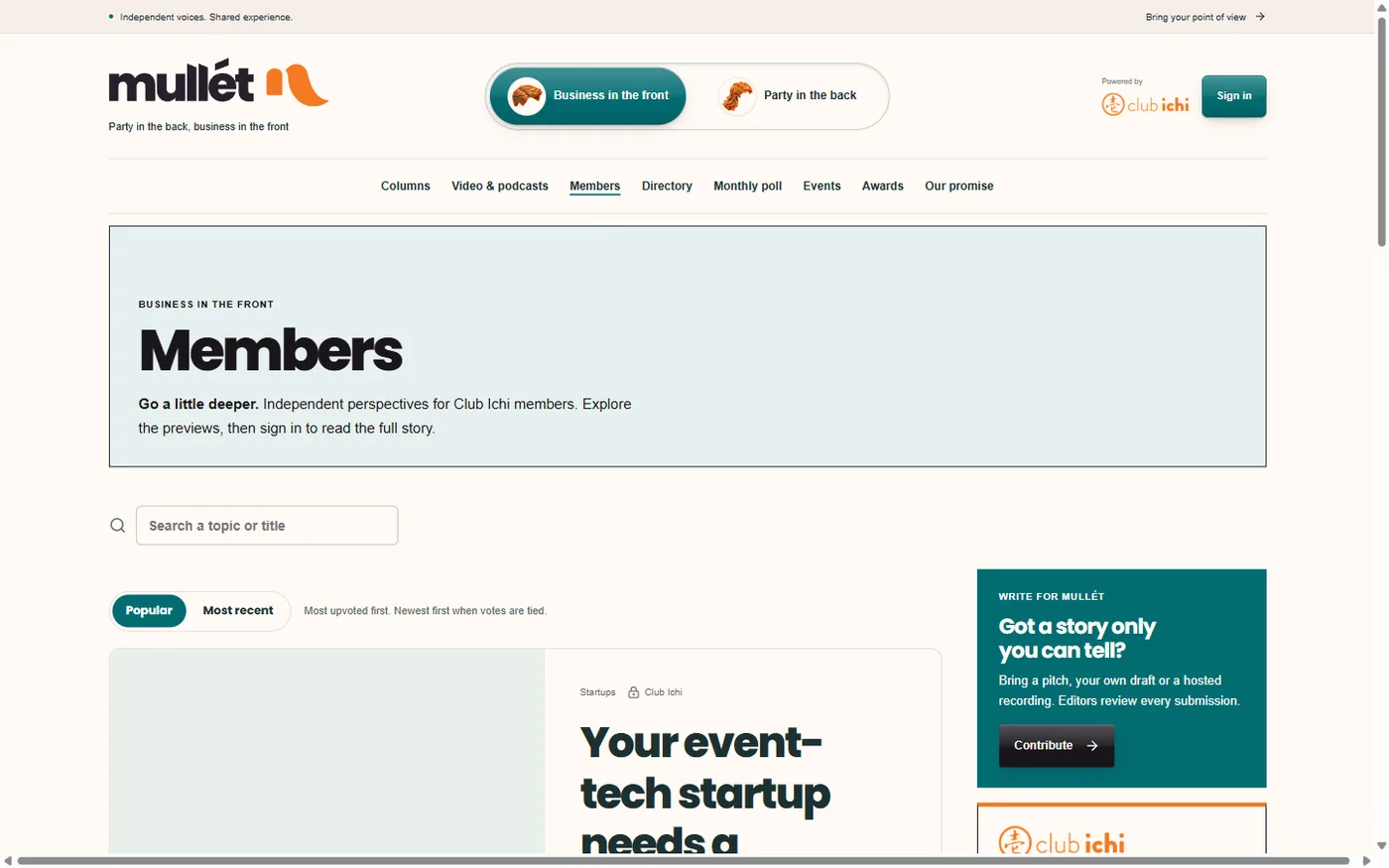
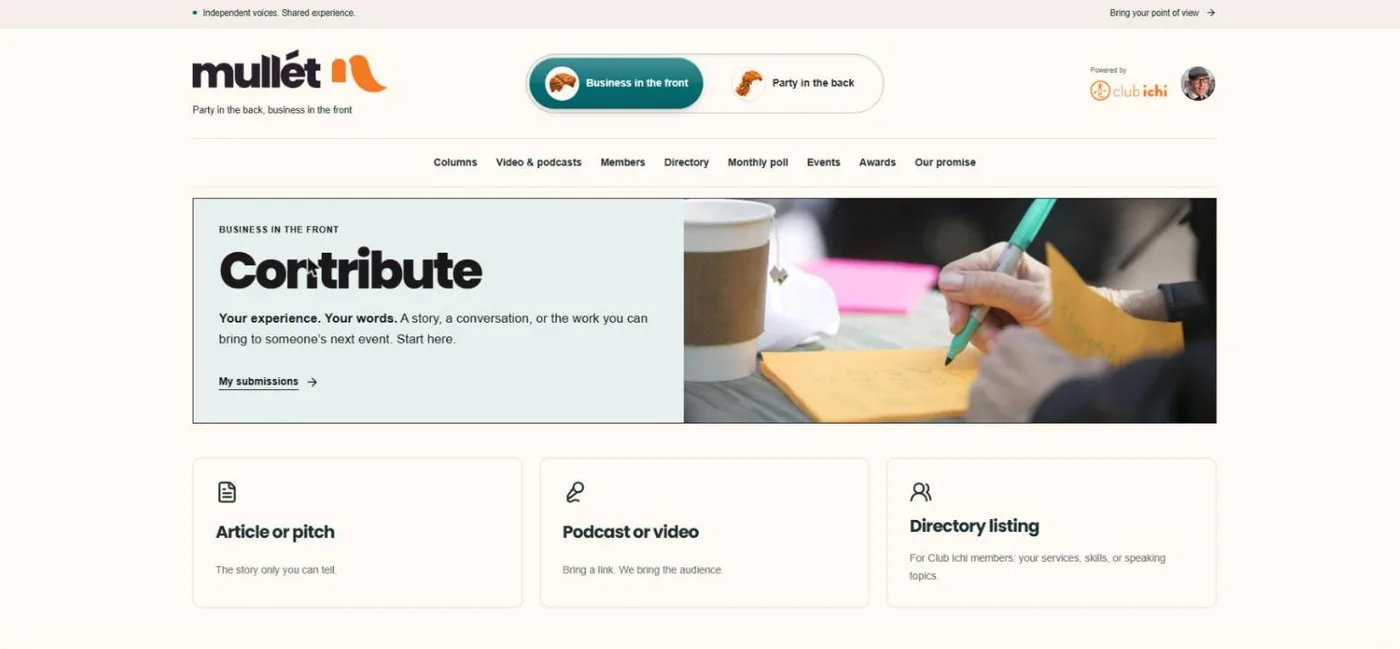
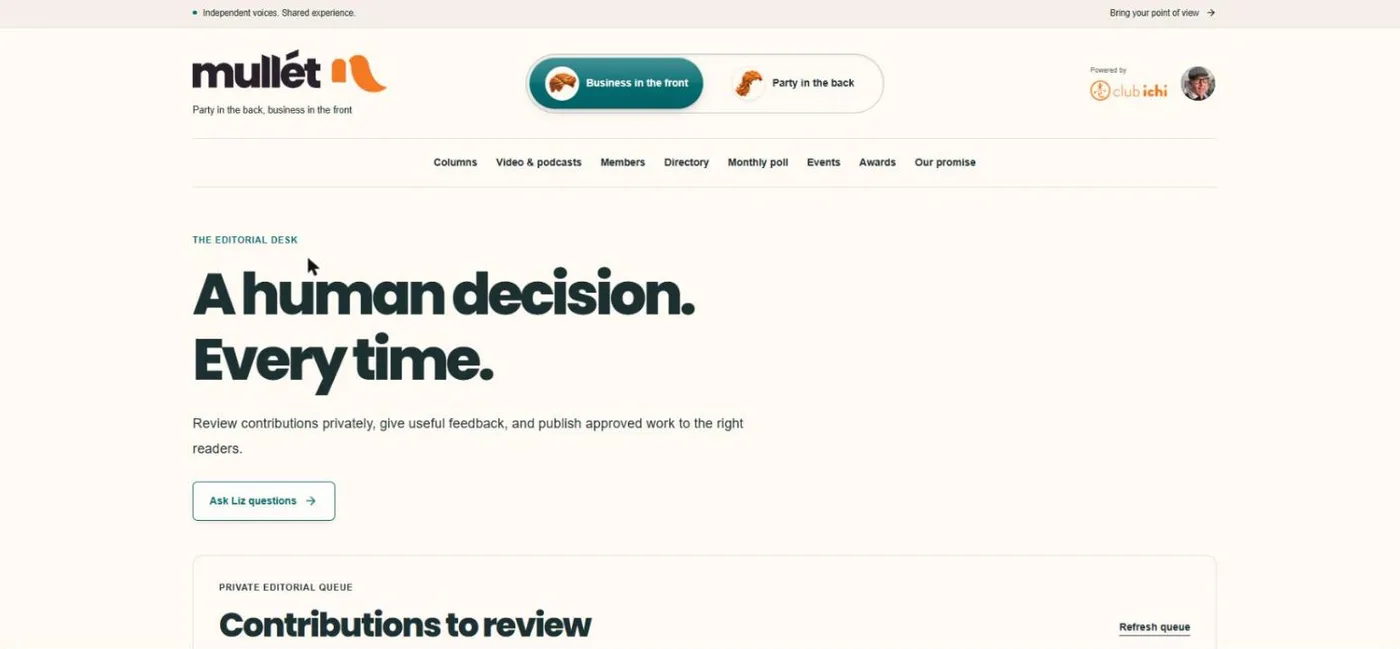
Members write the stories. Contributors use an article editor with inline images, headings, hosted video, and a live preview, then submit to a private editorial desk. Nothing publishes until it is approved. That gate is what lets a member-written site read like a publication.
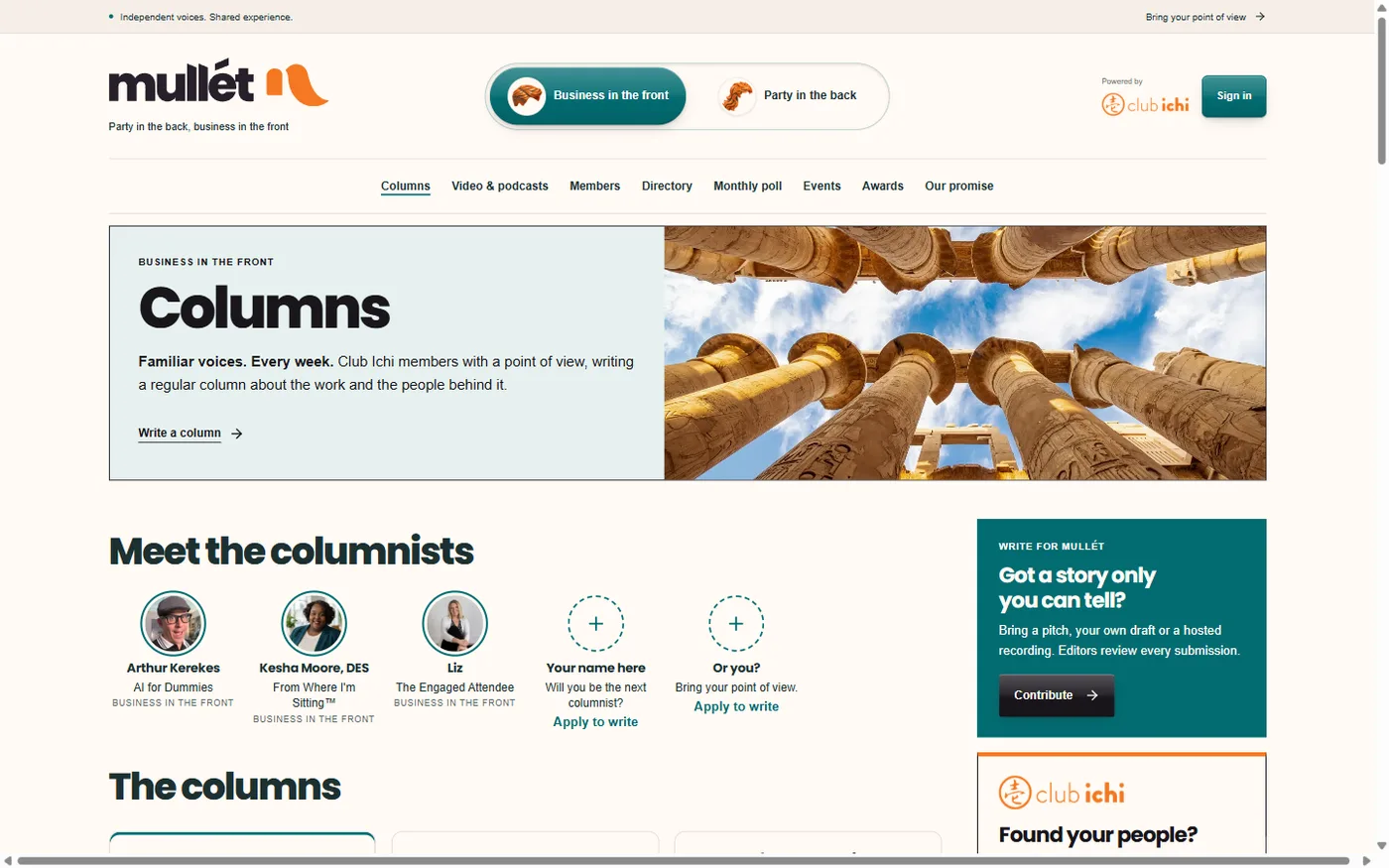
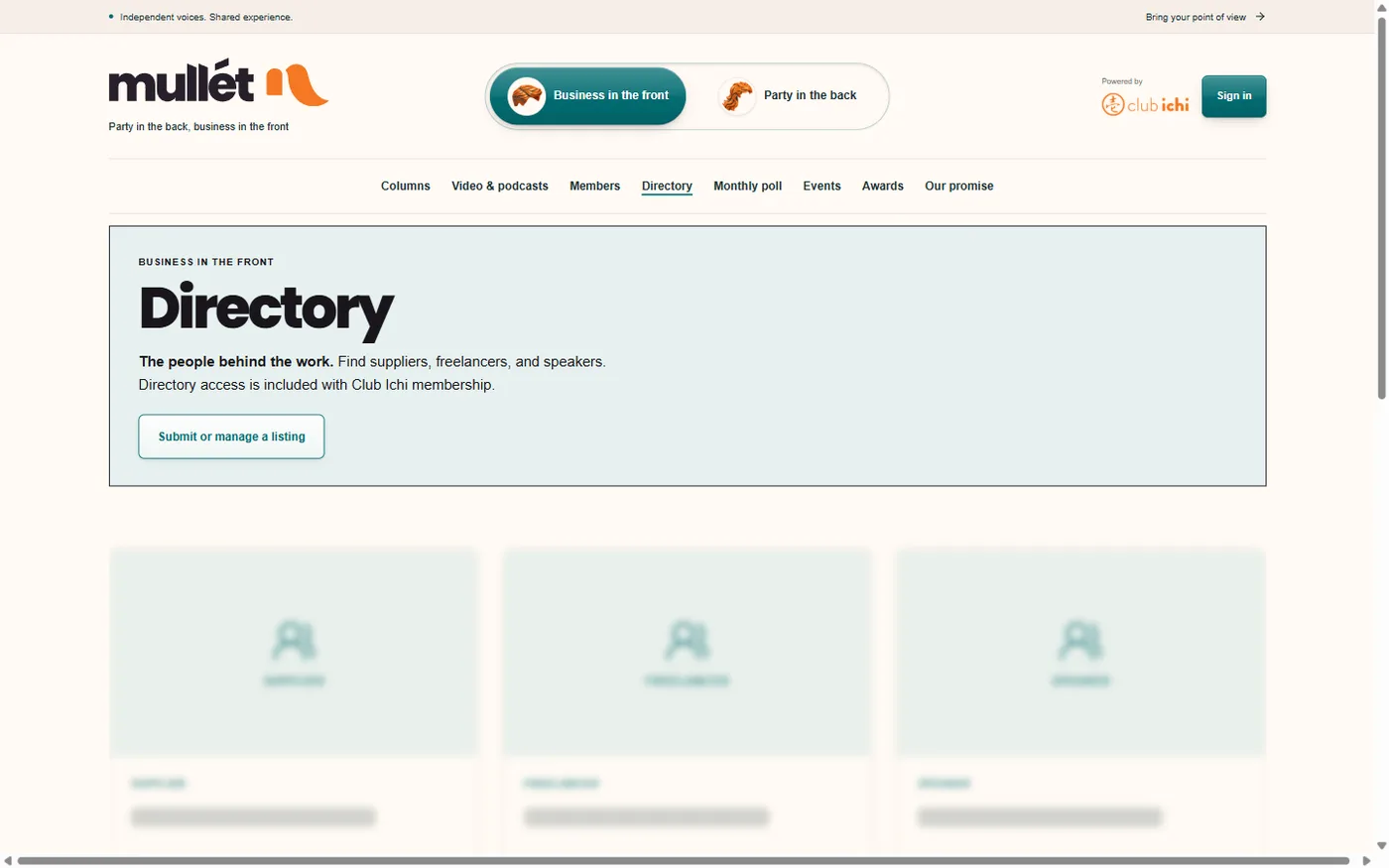
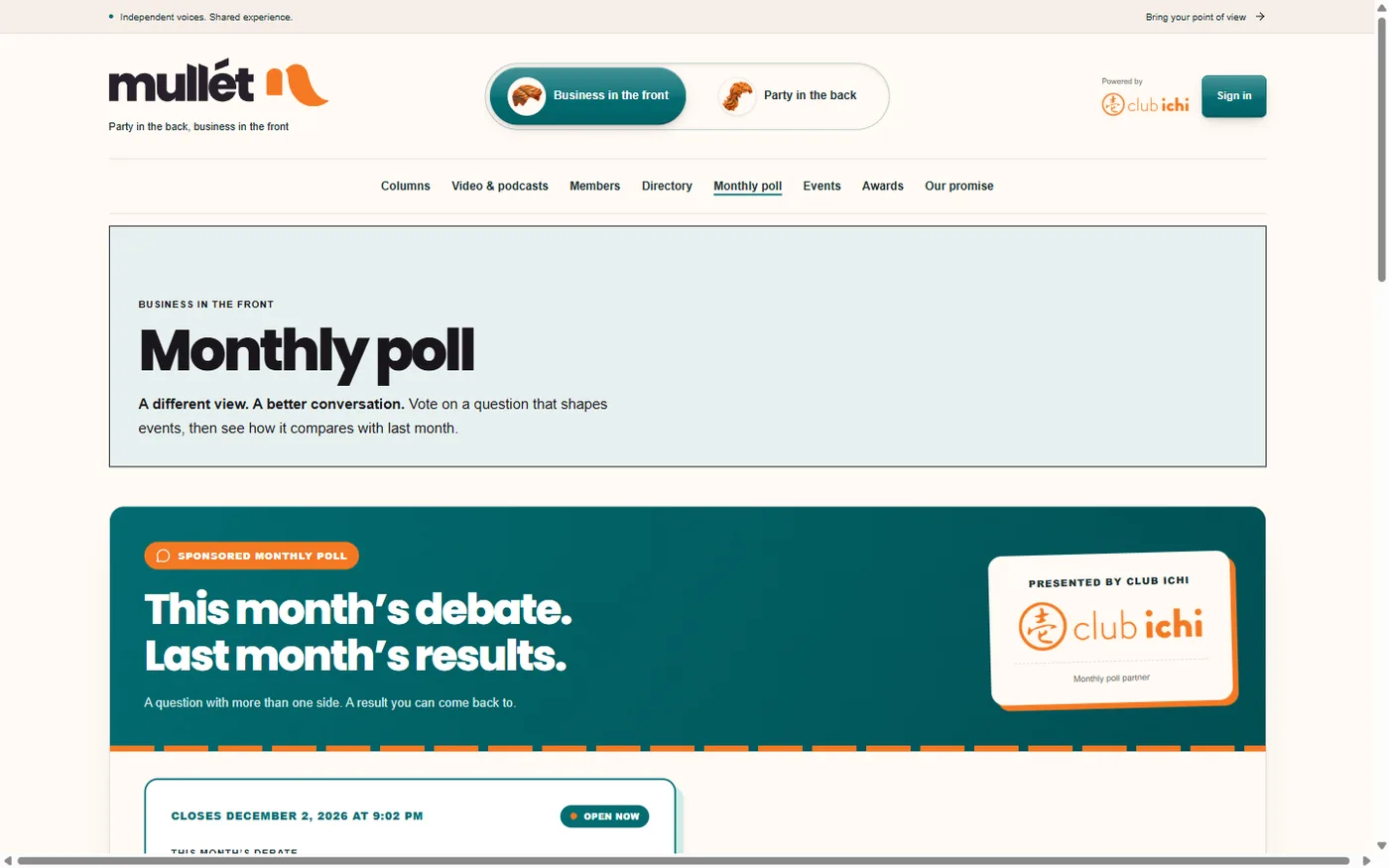
Around the stories sit the things a community uses: a professional directory with its own approvals, a monthly poll, events, awards, and columns. Membership unlocks premium articles, and everyone else sees a preview.
Moderators and admins have their own roles. Sponsor placements give partners a place in the publication without taking it over.
Keep the public layer simple. Keep the private layer locked.
Supabase holds everything private.
Accounts, drafts, premium article bodies, directory profiles, and interactions such as votes live in Supabase behind row-level security. Staff roles are set through migrations, and we verified both.
Sanity holds what is approved.
Only approved public articles, media, and premium previews reach Sanity. If something is in the CMS, it is meant to be seen.
One member, one account.
Members sign in with Google or with Club Ichi’s Slack workspace, and both resolve to the same account. Membership is verified through Slack, so the existing community decides who belongs.
Why split it? The public side stays simple: a Vite front end on Netlify reading published content. The private side never has to be exposed to make the public side work. A draft or a premium article body is never stored in the CMS, so it cannot be published there by mistake.
The staff side, built for people who are not developers.
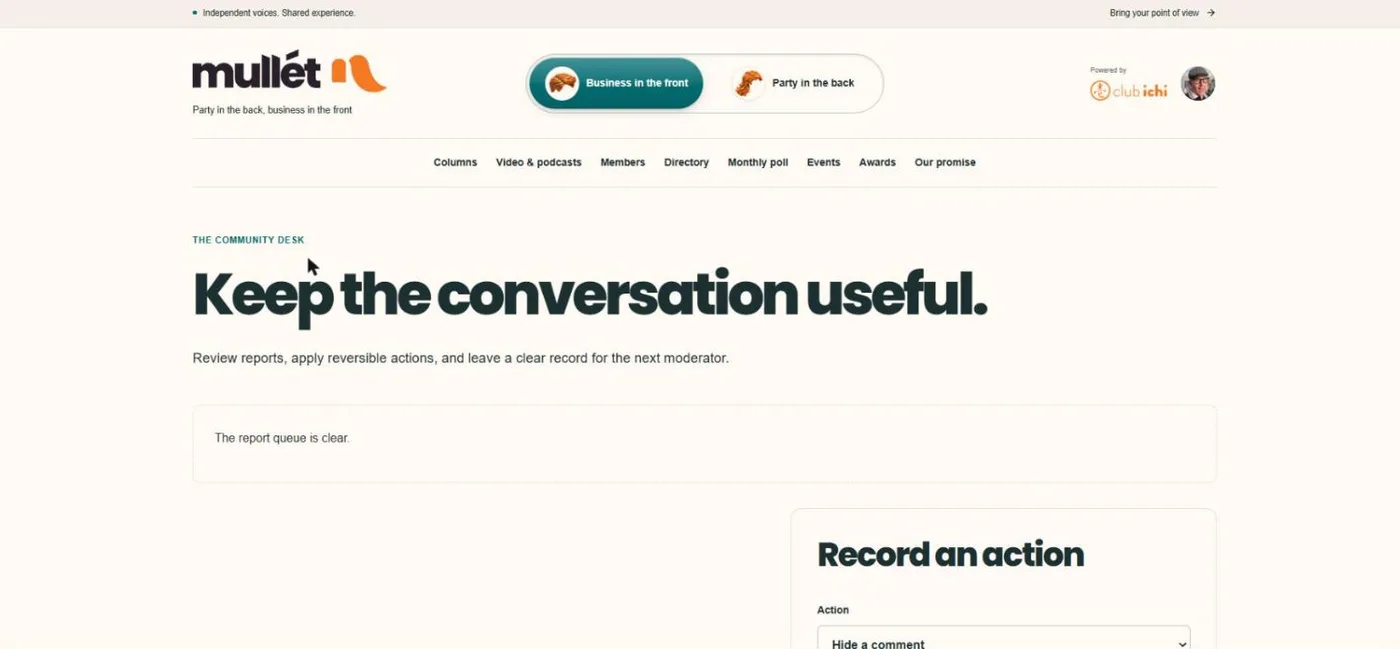
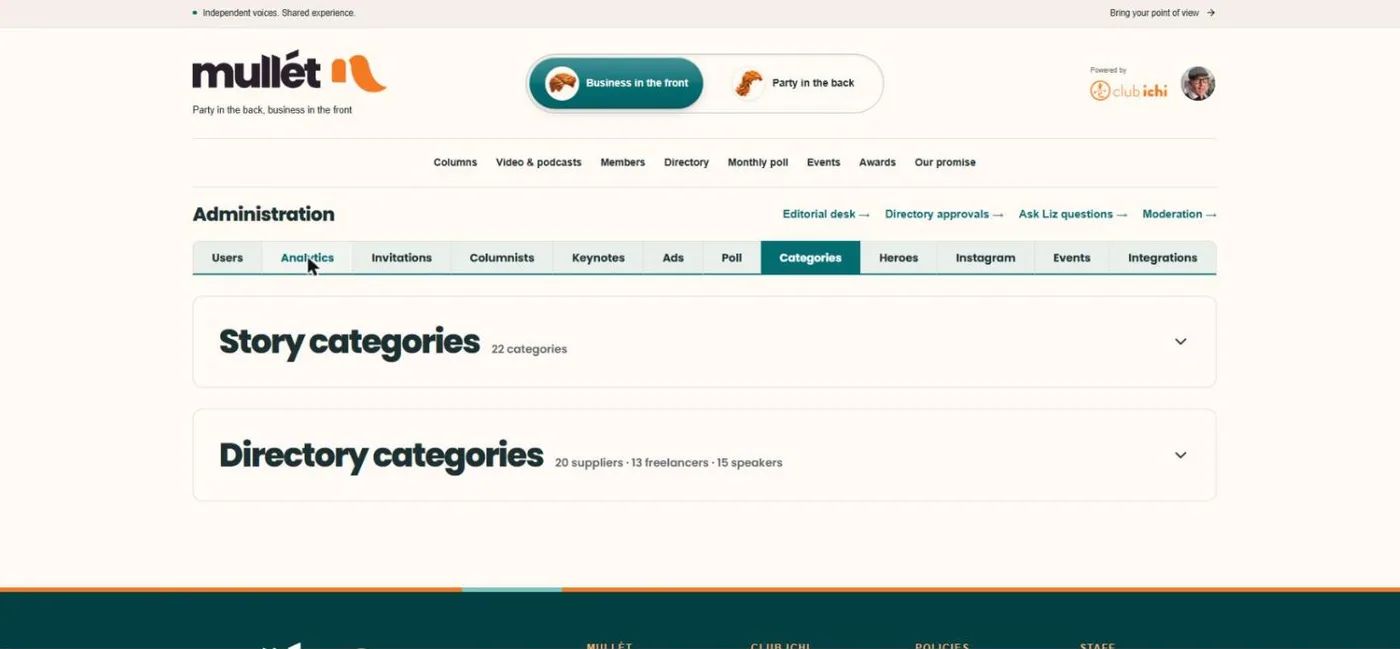
Everything a contributor or an editor does happens in the same site, signed in. Contributors pitch an article, a podcast or a directory listing from one page. Editors review the private queue, leave feedback and publish to the right readers. Moderators record reversible actions with a note for the next person. Administrators manage accounts, columnists, categories, polls, ads and integrations from one dashboard.
A publication its members actually write.
Mullét is live. Its stories come from real planners, producers, and suppliers, and every one passes the editorial desk first.
Readers upvote what they value, and the ranking is simple: most upvoted first, newest first when votes are tied. The directory connects members with each other, and the monthly poll gives everyone a reason to check back.
Explore Mullét, our custom website services, or StagePlot Pro for another tool we built for the events world.
Features described from the project documentation and the public site, November 2026. Screenshots show the public website. No traffic, membership, or revenue figures are claimed.
About the build
Who built Mullét?
Fusion Interactive designed and built Mullét for Club Ichi, including the contributor editor, the private editorial desk, membership, the professional directory, upvoting, and the monthly poll.
How do members sign in?
Members sign in with Google or with Club Ichi’s Slack workspace. Both routes resolve to one account, and membership is verified through Slack.
What technology powers the site?
Mullét uses a Vite and TypeScript front end hosted on Netlify. Supabase holds private data such as accounts, drafts, premium article bodies, directory profiles, and interactions. Sanity holds only approved public articles, media, and premium previews.
Can Fusion build a community or publishing platform?
Yes. We build platforms around how your community actually works, including member accounts, contributor workflows, editorial approval, gated content, and directories.