
AI Training
Hands-on AI training for individuals, teams, and organizations, built around your tasks, tools, and learning goals.
Build it with guidance, then keep going without us.
Arthur's coaching model is closer to teaching someone to fish than selling a permanent dependency. We get the build moving, explain the decisions and help when you hit the wall. You do not need a strategy deck to start using AI well. You need someone who has built real things to sit beside you while you build yours.
AI coaching is one-on-one guidance while you use AI on your own live project, rather than a course or a strategy deck. It suits founders with a product idea, leaders deciding where AI fits, and builders who have hit a wall. Arthur Kerekes, founder of Fusion Interactive, works through the next step with you and explains each decision so you can make the next one yourself.
Practical coaching for leaders and builders who want to use AI on real work, not collect another strategy deck.
Sessions use your actual project. That might be a tool you want to prototype, a workflow you want to improve, or a decision about which AI product your team should adopt. Each session starts with a clear goal and ends with progress you can see: a working step, a clearer scope, or a decision made with the tradeoffs on the table. You leave with progress, not homework invented to fill an hour.
The coaching comes from building. Arthur's background is in live events and production. StagePlot Pro began as his weekend experiment for a problem he knew from that work, and it now has over 1,600 accounts. Building and running that product, along with client work such as the Monterrey CRM and Content Sidekick, is where the advice comes from: how to narrow an idea until it can ship, when AI output needs a second look, and when a project needs an experienced developer rather than another prompt.
We are direct when an idea is too broad. The most common problem we see is a first project that tries to do everything. A good coach helps you find the smallest version worth building and gets it working before the scope grows.
Coaching also suits leaders who are not building themselves. If you are deciding where AI fits in your business, we pressure-test one opportunity at a time against value, data, risk and ownership. If the honest answer is that a simpler tool, or no AI at all, would serve better, we will say so. AI is available when it serves the brief.
The goal is independence. We explain why each decision is made so you can make the next one without us. Some people need a few sessions to get unstuck; others prefer regular check-ins while a project moves. Either way, you keep the work, the tools and the methods.
A first session usually looks like this. You explain what you are trying to do and where it is stuck. We look at what exists so far, whether that is a rough idea, a half-built prototype or a list of tools someone recommended. Then we pick one step to finish before the session ends: setting up a tool, cutting the scope down to something shippable, fixing the bug that stopped progress, or writing the questions a vendor needs to answer. Between sessions you carry on alone, and the next session starts from what you learned. That rhythm is what turns coaching into progress instead of conversation.
If coaching shows that you need a full build, we can move to a scoped project. That work follows our published tiers: Starter at $2,500–$5,000 CAD over 2–4 weeks, Professional at $5,000–$15,000 over 4–8 weeks, and Enterprise at $15,000+ over 8–16+ weeks. Coaching itself is quoted before work begins, and the first step is a free 30-minute call.
The questions we work through before quoting, so the first release does one job well.
AI coaching gives you direct guidance on a live problem. You might be choosing tools, improving a content process, building an internal assistant, or testing a software idea. The session works best when there is a concrete task and a decision you need to make.
We start with your experience, current setup, and desired outcome. If the idea is too broad, we narrow it to a useful next step. You should leave with progress on the actual project and a clearer understanding of the decisions, rather than a generic list of tools to explore.
We work through the task together and explain why a particular approach helps. That may involve structuring a prompt, organizing source material, choosing an integration, or debugging a generated result. You see the tradeoffs while they matter to your project.
Review is part of the method. We inspect output, test assumptions, and identify where the tool is unreliable. Being able to recover from a wrong answer is more valuable than memorizing a prompt that worked once.
Some goals can move forward through guided practice. Others require a developer, a security review, or a custom build. We distinguish learning support from production responsibility so you understand what the session can resolve and what needs a separate engagement.
Access and information handling matter here too. Use approved accounts and appropriate samples. A coaching session should not make an unreviewed production change because a demonstration happens to work.
Before a session, bring the current result, the instruction or workflow that produced it, and the point where you got stuck. Screenshots and a small reproducible example can be useful. We can spend more time resolving the issue when the context is already available.
We agree on practical next steps and what you can continue independently. Follow-up can focus on the next obstacle or a review of your progress. The aim is to build your judgment and capability, with support available when the work needs it.
Jobs this service is built for. Named projects link to their case studies; the rest are typical starting points, not past results.
Narrow the idea to one painful problem, set up the tools and build a first version small enough to test. StagePlot Pro started this way, as a weekend experiment aimed at one production problem.
Pressure-test one opportunity at a time against business value, available data, risk and ownership, and leave each session with a decision or a clear next test.
Bring the project that stalled. We review what was built, debug alongside you and explain the fix so the same problem does not stop you next time.
Choose a few approved workflows with owners, try them on real work and check the results before rolling them out further.
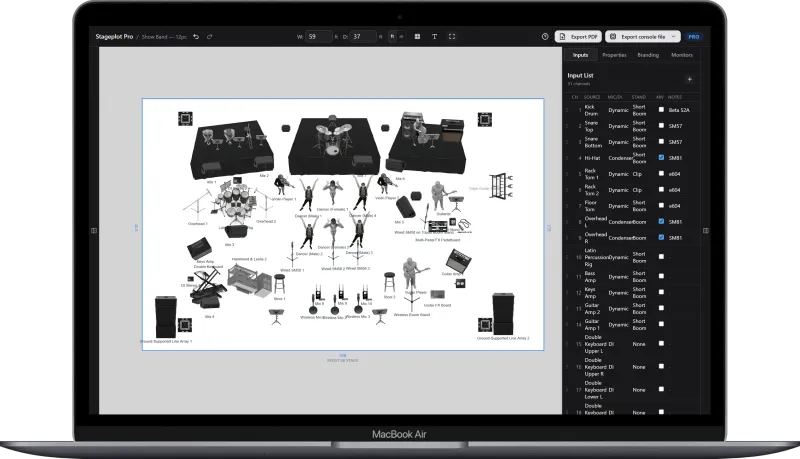
StagePlot Pro
SaaS · Live Production
Our own stage plot software, built around a working production problem and growing through search.
Read the StagePlot Pro case studyBefore you act on a polished answer, check the source. Arthur explains why review belongs in every AI workflow.
Arthur Kerekes Founder, Fusion Interactive In the room at Go West
Bring practical AI to your teamReview your project, setup, and the point where you need help. Agree on a session goal small enough to make meaningful progress.
Choose an approach and explain the tradeoffs while applying it to your actual task.
Inspect the result, check assumptions, and recover from errors. Identify any production or specialist work that needs a separate scope.
Agree on the next steps you can carry out independently and the follow-up support included in your engagement.
Coaching builds your ability to do the work and make the decisions yourself. A project is us building it for you. Many people start with coaching and move to a scoped project if they need a full build.
Arthur Kerekes. His background is in live events and production, and StagePlot Pro began as his weekend experiment; it now has over 1,600 accounts. The coaching comes from building and running real software, not from theory.
No. We start from where you are. Non-technical founders and leaders are a common fit, and technical builders get deeper review of their code and architecture.
Individual coaching starts at $500 per session, and a monthly retainer for ongoing advice starts at $2,000. If it turns into a build, project work follows our tiers: Starter at $2,500–$5,000 CAD, Professional at $5,000–$15,000 and Enterprise at $15,000+. The free 30-minute call is the place to work out the right format.
We collaborate remotely and can arrange in-person meetings in the GTA.
As long as it is useful. Some people need a few sessions to get unstuck; others prefer regular check-ins while a project moves. The aim is for you to carry on without us.
Bring a practical goal such as improving content, choosing tools, building an assistant, or working through an AI coding project. We focus on the next useful step and explain the decisions as we work. Production development or specialist review may need a separate scope.
Yes. We adapt the starting point to your experience and project. A beginner may need account setup and basic review habits. An experienced user may need help with a specific workflow or technical obstacle. Share your current setup before the session.
Coaching is guided work that develops your own capability. We can help you make progress, review an approach, and troubleshoot. If you need a complete delivered system with production support, we scope that as a build rather than implying it is included in coaching.
We agree on the goal, session format, preparation, and follow-up. A focused consultation differs from recurring project support. The pricing page provides engagement starting points, and the quote identifies the time and deliverables included.
Hands-on AI training for individuals, teams, and organizations, built around your tasks, tools, and learning goals.
We connect AI capabilities to existing business systems with clear data paths and failure handling.
We connect people, software, and AI into workflows with visible states and sensible handoffs.
Tell us about the AI coaching work you have in mind. We will come back with next steps, or a straight answer if a simpler tool would do the job.
Book a free 30-minute call